At a recent hands-on session, people came in with different levels of experience. Some were already building apps with AI. Others were still figuring out what an AI agent could do beyond answering questions.
Manus 2.0 gave them a practical way to find out. With 8,000 credits sponsored by Manus, participants could try creating images, videos and presentations, build small apps, and experiment with workflows. The most memorable part was watching people bring their own work and ideas into the experience.
From chatting with AI to handing it a real task
For many people, AI still means opening a chat window, asking a question, and getting a response. Manus offered a different starting point: give it a task and see what it can help produce.
That distinction became clear when some participants used Manus to create sales videos and presentation decks they planned to take to work on Monday. The output was connected to an immediate need, not a hypothetical demo. They could look at what Manus made, decide what needed changing, and continue refining it toward something useful.
This is an important first experience for people who are new to AI agents. They don’t need to understand agent architecture before they can see the value. They can start with a task they already have, then learn by observing how the agent handles it and where their own direction is still needed.
Three ideas, three different kinds of work
One participant built two small apps. One of them collects useful updates from social media and displays them as a desktop wallpaper. It began with a familiar problem: people want to stay informed, but constantly switching tabs and checking feeds interrupts their work. The app turns that information into something easier to glance at during the day.
Another participant explored an app for people learning guitar or piano. Alongside chord references, the concept included backing music, a circular rhythm guide, and visual instructions for how to play each chord. The idea combines reference material with practice support, so learners can move from looking up a chord to trying it.
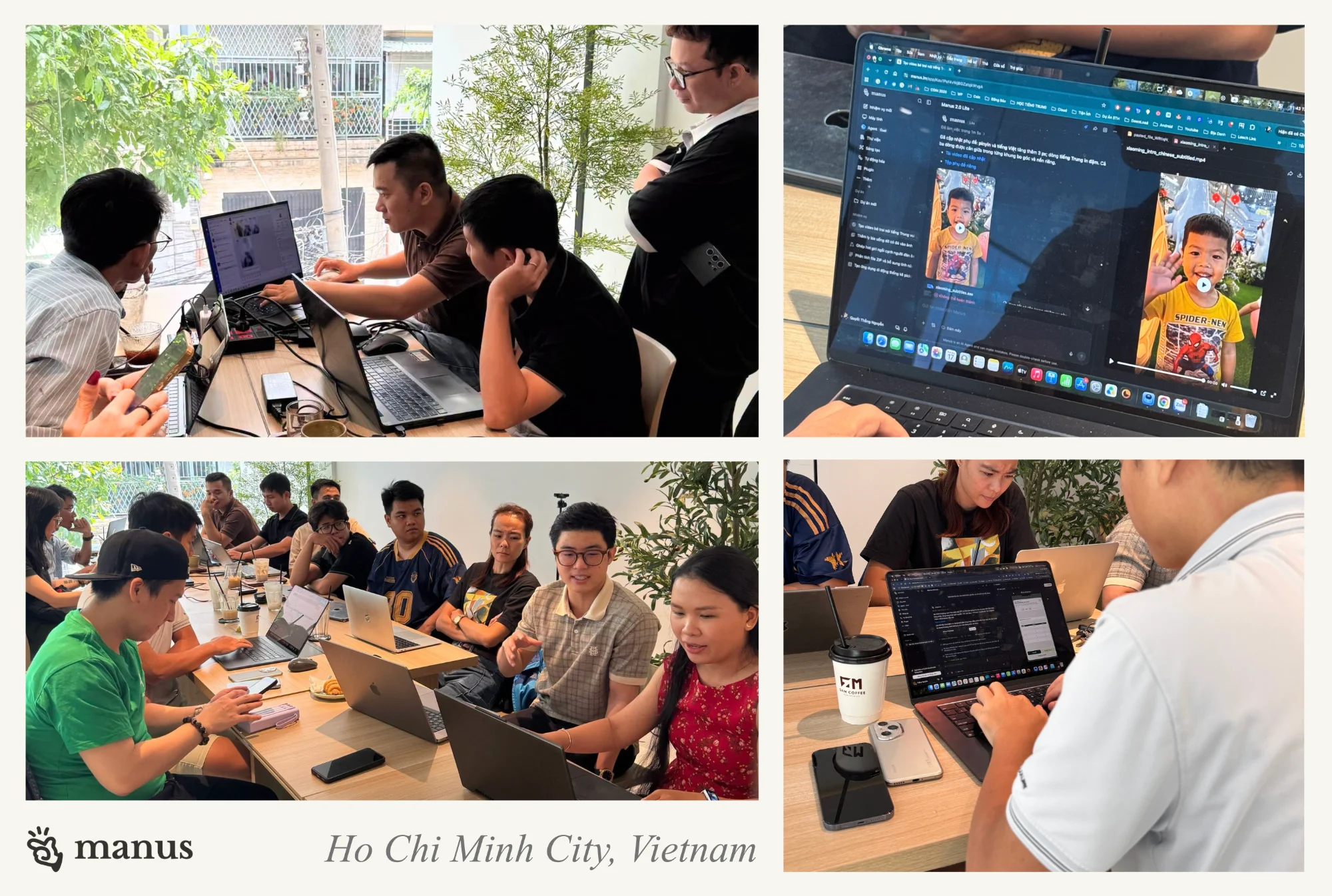
A third project was an English-learning app built for both web and mobile. Learners can upload their own materials, study from those documents, review vocabulary with flashcards, and practice pronunciation. Its creator completed the app in about two weeks and does not work in tech.
These projects were different in ambition, but each began with a specific job to be done: keep up with information, practice music, or learn English from personal materials. That made the prototypes easy to understand and gave their creators a clear next question: what would make this more useful for the person it is meant to help?
The sponsored credits made experimentation tangible
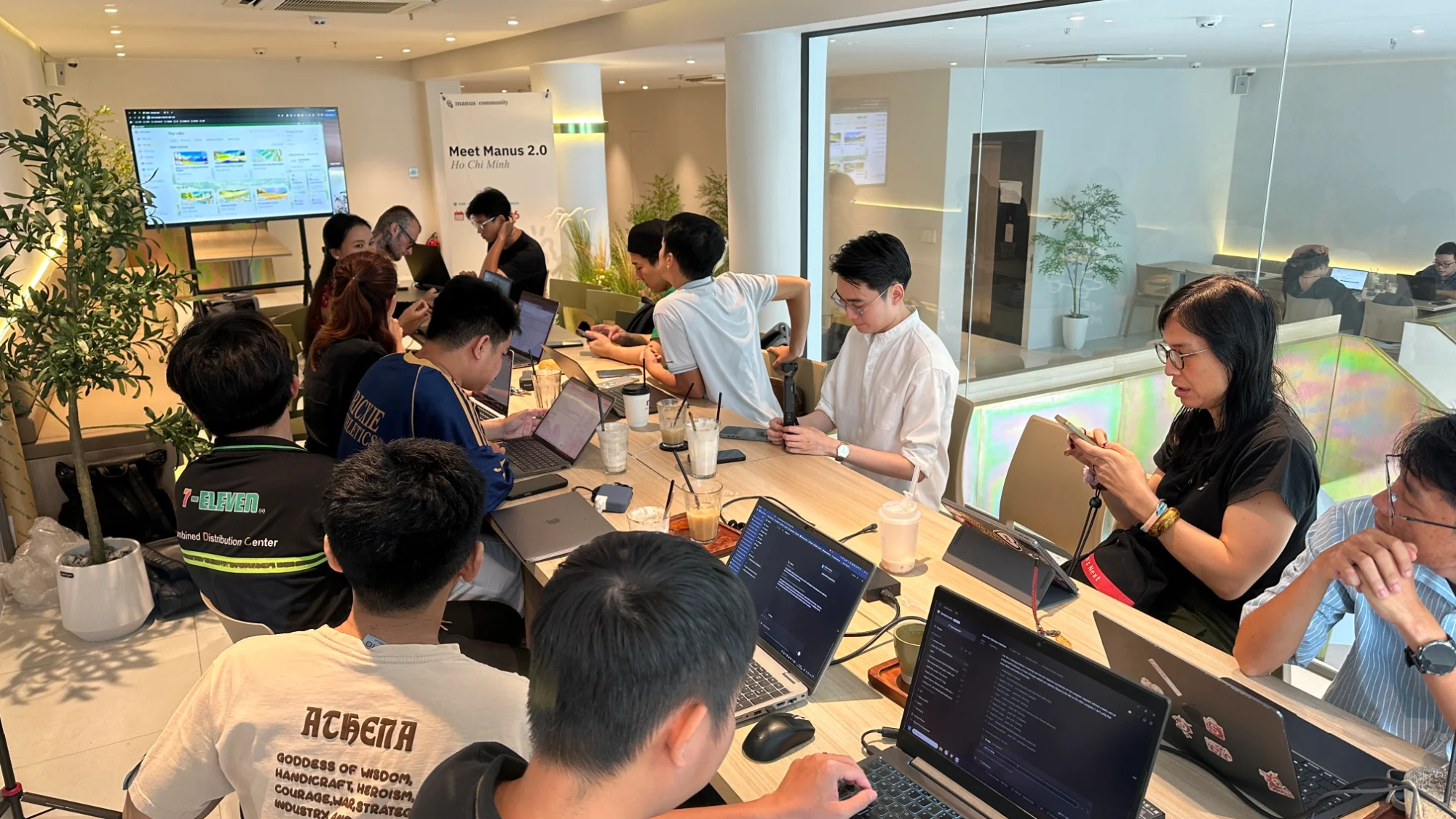
The 8,000 credits sponsored by Manus gave participants room to explore the product directly. They could try different kinds of work instead of watching a single prepared demo. Some focused on visual content; others used the time to build or test an app idea.
That hands-on access changed the conversation. Instead of asking only what Manus might be capable of, participants could compare outputs, identify where the tool saved effort, and see which parts still needed their judgment. The credits helped turn curiosity into a working session.
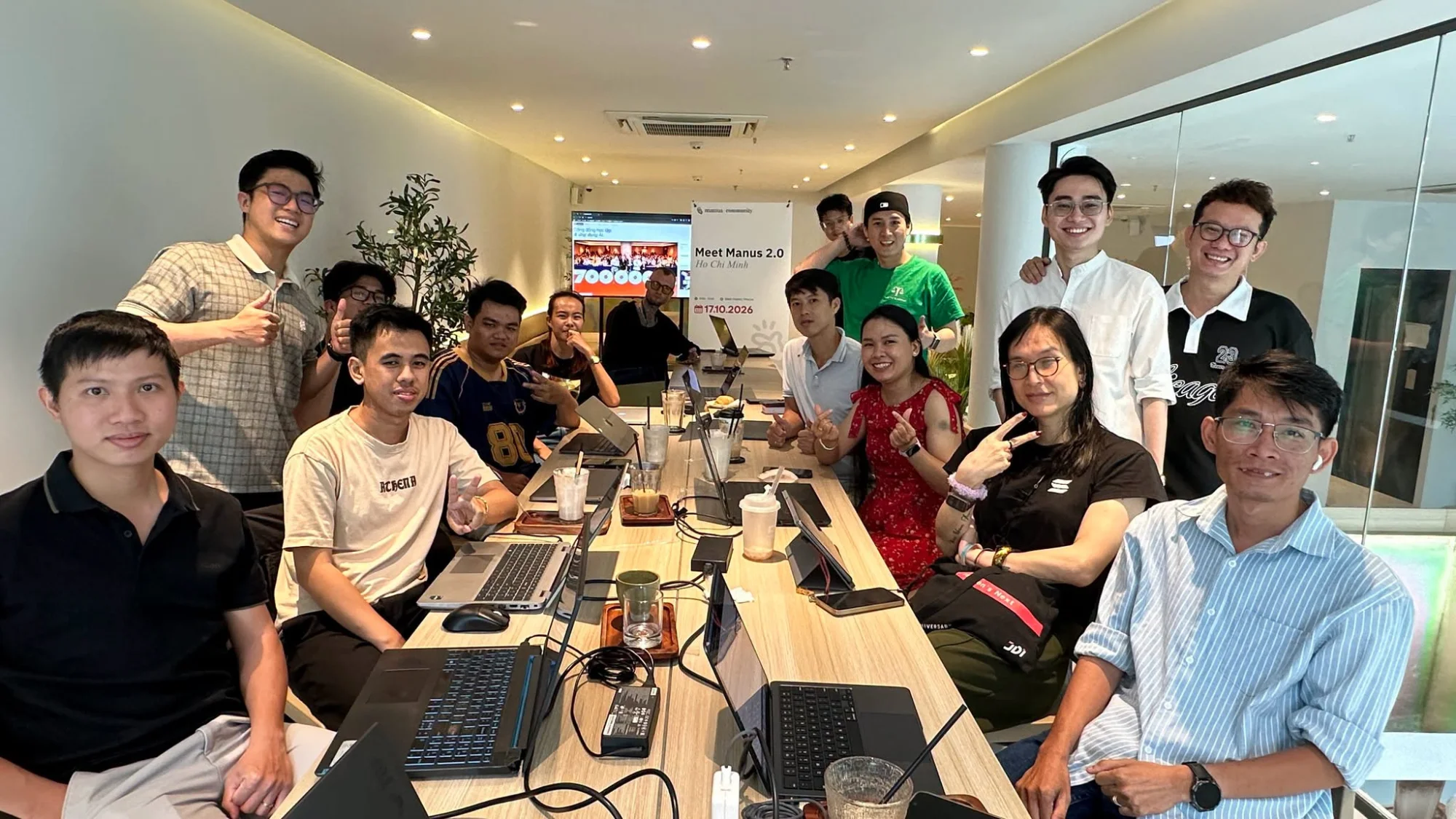
A few participants also used Manus to make materials they could take back to their jobs: a sales video or a presentation deck for Monday. That is a meaningful bridge between experimentation and adoption. A tool becomes easier to understand when someone can connect it to a task already waiting in their inbox.
The first version changes the next conversation
None of these prototypes needed to be a finished product to be valuable. A first version makes an idea visible. Once people can see and interact with it, they can give more specific feedback, notice what is missing, and decide whether it is worth continuing.
That is especially useful for people who are not software developers. The barrier is no longer only “Can I write the code?” It is also “Can I describe the problem clearly, guide the tool, and judge whether the result actually helps?” Manus can help with the making, while the person still brings the context, taste, and decisions.
The projects also surfaced a question beyond building: how will these tools reach users, and what would make people return to them? Creating an app is one step. Finding a real audience and building a sustainable product is another. Those questions become much easier to discuss once there is something concrete to test.
Why Manus 2.0 stood out
The strongest impression was not that Manus could generate many kinds of output. It was that people with different backgrounds could use it to move toward something they personally wanted to make.
For one person, that meant a deck or video for work. For another, it meant a small tool for keeping up with social media. For someone else, it meant turning a learning idea into a web and mobile app in about two weeks.
That is a compelling role for Manus: helping people move from “I have an idea” or “I have a task” to a first result they can inspect, improve, and put to use. The more directly the experience connects to work people already need to do, the easier it becomes to understand what an AI agent is for.